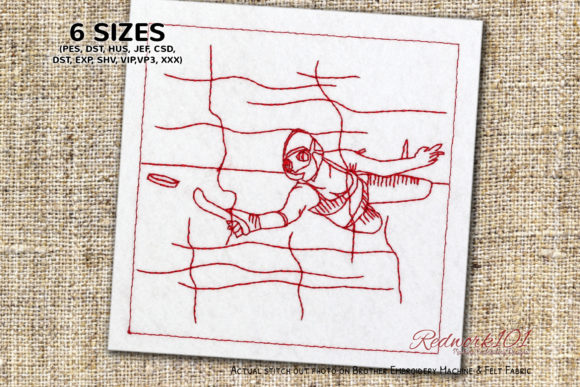
Underwater Hockey Player Redwork
A Bold Choice for the Curious and the Crafty
As a designer who has stitched through countless embroidery projects, I’ve learned that the right design can make or break a finished product. When I first saw Underwater Hockey Player Redwork, I was immediately struck by its playful energy and unique theme. This isn’t just another generic redwork piece—it’s a statement. It feels like a conversation between the designer and the hobbyist, inviting both to explore the quirky world of underwater hockey.
The Mood and Visual Personality
Underwater Hockey Player Redwork carries a sense of humor and adventure. The layout is clean, with a focus on the player’s silhouette and the subtle details of the sport. The redwork style gives it a vintage charm, but the subject matter keeps it modern and approachable. It’s not overly detailed, which makes it versatile for various applications. The overall mood is friendly and engaging—perfect for someone looking to add a bit of personality to their handmade items.
Where Does It Fit Best?
When considering where to use Underwater Hockey Player Redwork, I think of custom apparel, personalized gifts, and boutique products. A sweatshirt embroidery or a custom tote bag design could be ideal. Imagine a baby onesie with this design—playful yet appropriate. It also works well on caps, hats, and even embroidered patches. For those running a craft business or selling on Etsy, this design could stand out in a sea of generic options.
Real-Life Scenarios
Let’s say I’m preparing a custom embroidered tote bag for a local boutique. I’d consider how the design would look on fabric, especially when paired with other elements. Would the Underwater Hockey Player Redwork hold up against other embroidery? How does it interact with the overall color scheme? These are questions I ask before committing to a design.
Another scenario: a holiday gift. A personalized gift like a pillow cover or a tea towel could benefit from this design. It adds a touch of whimsy without being too overwhelming. However, I’d need to ensure the Underwater Hockey Player Redwork doesn’t get lost in a busy pattern or background.
Practical Considerations
Before using Underwater Hockey Player Redwork in a real project, there are several factors to consider. First, test the design on scrap fabric. Check how it looks on different fabrics, especially textured or dark ones. The contrast between the thread colors and the fabric will greatly affect the final appearance.
Also, pay attention to stitch density. While the design is relatively simple, some areas might require more attention, especially if you’re working with small hoop sizes. Make sure the hoop size matches the design dimensions. Using the right stabilizer is crucial for maintaining stitch clarity and preventing puckering.
For commercial embroidery or digital product sellers, it’s important to confirm licensing before selling the finished item or digital file. Always check the terms of use to avoid any legal issues.
Design Assets and Mockups
Before printing a printable mockup or using the design as part of a digital embroidery file, review it in black and white. This helps identify any potential issues with contrast or detail. Also, compare the design on light and dark backgrounds to ensure it remains visually appealing in different contexts.
If you're planning to use Underwater Hockey Player Redwork for a small shop product, consider how it aligns with your brand. Does it reflect the personality of your craft business? Will it resonate with your target audience? These are important questions for handmade product creators and creative entrepreneurs.
Final Thoughts
Underwater Hockey Player Redwork is a fun and functional design that offers versatility for both personal and commercial use. It brings a unique flair to embroidery projects, whether it's a custom apparel piece or a holiday gift. With the right preparation and attention to detail, this design can elevate your embroidery project and create something truly special.
Remember to always test the design, check thread color contrast, and ensure the stitch density is suitable for your project. By doing so, you’ll maintain the integrity of the design and provide your customers with a high-quality, visually appealing finished product.